Tobias Diebold: When efficiency becomes client value
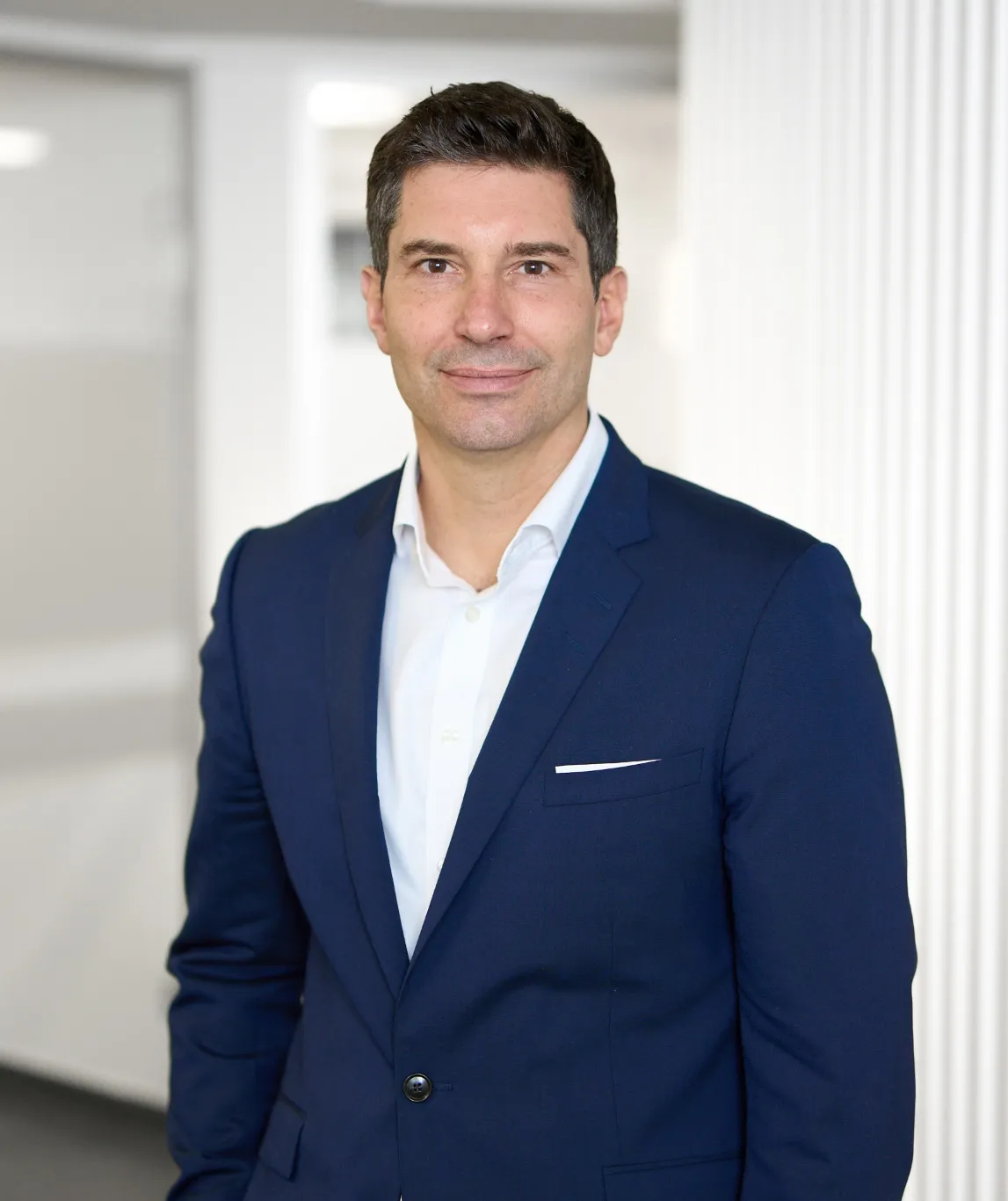
Dennemeyer CEO on changing client expectations, AI and the responsibility that remains human.
For the first interview in TechLex’s new series, The firm in question, Dennemeyer was a natural choice. Today I am speaking with Tobias Diebold, the man in charge of a Luxembourg-based global IP group that combines a law firm, managed services and a technology business. Diebold joined Dennemeyer as Chief Commercial Officer in 2018 and became CEO in July 2022, following a career in aviation. I wanted to get his perspective on the industry built around trust, reliability and quality.
You came to IP from aviation. What carried over from one industry to the other?
Both industries place a high value on safety, security and reliability. In IP, a mistake can mean losing a client’s IP assets. There is less room for trial and error than in many other industries.
IP is also a complex environment. You have patent offices, agents around the world, IP departments and outside counsel. Aviation has a similarly complex operation.
I bring a commercial and strategic background. The framework I use has three pillars: operational excellence, service excellence and commercial excellence. How efficiently can we run the operation? What does the client consider good service? And how do we make money?
The IP industry protects innovation, but it has been slow to adopt it in its own work. In my early years at Dennemeyer, we were still having discussions with large clients about whether to put their data in the cloud. Many used our IP management system on their own servers. That has changed significantly, and AI is now accelerating the pace of change.
How have clients’ expectations changed over the past 12–18 months?
There has been a clear change, particularly among larger companies. Clients still want a reliable partner, but they also want better insights from their systems and greater efficiency.
The pressure comes from both finance and technology. The CFO wants cost savings, and there is pressure across the organisation to use technology and AI to become more productive.
Clients look beyond the price of the service. They want to know what it means for their own organisation. They do not want to use 20 tools, deal with fragmented data or enter information manually. They are also less willing to provide information in whatever format a supplier requires.
Clients expect us to guide them through the fragmented jungle of IP: different jurisdictions, patent and trademark offices that are not well connected, and years of legacy data. They want a more efficient operation and less time spent on activities they do not see as adding value.
Dennemeyer combines legal services, managed services and software. Where does technology make the biggest difference for clients?
One important area is better digital connectivity with clients. Sending large amounts of data back and forth by email is not the way forward. Our strategy is to build digital connections with clients wherever we can and reduce their administrative burden.
The obvious uses of technology are to reduce manual work, improve efficiency and increase quality. Manual work is prone to error, and machines are better suited to handling large amounts of data.
Handling administrative work efficiently and to a high standard across jurisdictions has always been central to what Dennemeyer offers.
If AI saves time but creates more checking, how much do clients really gain?
It is too early to say where the balance will settle. One argument is that AI replaces junior work while the work of senior lawyers becomes more valuable, so firms can charge the same or more. I am not sure that is the right approach—or that things will develop that way.
Ultimately, productivity gains must translate into clear client value. That can mean faster work, more output or better quality. Prices might stay the same.
If we tell clients we have invested millions in technology, they understandably want to know what they will gain from it. The investment has to be paid for, and not every deployment delivers the full productivity gain yet. But over time, I believe the marginal cost of handling administrative work must fall.
What cannot be handed over to AI?
Accountability.
I cannot tell a client, “The AI made a mistake. I am not responsible.” A human being remains accountable. That will not change.
Human judgement is a less settled question. We will probably still need it for some time, but the models are already quite good at it, and the speed of their development is impressive. It is hard to say where that will lead.
What would you say to a small law firm asking which AI system to buy?
Ours, of course. (Smiles.)
But seriously, I would start with strategy, not the tool. What is your niche? What specific value can you offer a particular group of clients?
In IP, very few players operate globally across all those jurisdictions and national rules. You still need local agents. A smaller firm can focus on a particular industry, a jurisdiction or one part of the IP lifecycle. You might help clients at the invention stage rather than trying to cover everything.
Firms now need to invest in technology. Unless you offer highly specialised expertise, the days of relying on your knowledge and working with pen and paper are gone.
For an established firm, introducing AI is harder than starting from scratch. There are already processes and systems in place, often working well, which makes change more complicated.
Do not be too broad. Combining services creates opportunities, but it also adds complexity and makes it harder to stay focused.
Personally I believe while AI capabilities are developing rapidly, professional judgement, oversight and accountability will remain essential to how we serve clients.