Your AI strategy might be missing a commercial opportunity
Your AI strategy might be missing a commercial opportunity
AI is finally starting to pay its way in law firms, but the value is still trapped inside documents and inboxes instead of turning into better client relationships and new matters. The missing link is a modern CRM that sits in the workflow, not on the sidelines.
AI speeds up the work, not the revenue
You may already be using AI for contract review, research, or drafting. Turnaround times drop, quality is more consistent, and associates have more capacity. That is progress.
But ask a simple question: when AI helps your team spot a risky clause, a new jurisdiction, or a change in the client's deal pattern, where does that signal go?
In a typical setup, it dies in the matter file. The document is fixed, the email is sent, and everyone moves on. No one connects that signal to:
- Who at the client needs to hear this.
- Which practice could help next.
- Whether this looks like similar work you've done for another client.
AI has made the work smarter. A connected CRM makes the firm smarter.
What a modern CRM adds to an AI-enabled firm
By "modern CRM" I mean a system that:
- Automatically captures interactions from email and calendar.
- Maps who knows whom, and how well.
- Links relationships to matters, practice areas, sectors, and outcomes.
- Surfaces next-best actions inside the tools partners already live in.
When you connect that kind of CRM to your AI-enabled workflows, three useful things start to happen.
1. Cross-selling stops being "nice in theory"
Imagine your team has just closed a cross‑border acquisition for a long‑standing client. The AI tools helped you get through the SPA and DD reports faster and with fewer late nights.
A connected CRM can then:
- Analyse your complete relationship history with this client—every matter, every email, every meeting—to identify which practice areas have never been engaged.
- Automatically surface that this client has recently expanded into new jurisdictions where your employment and data protection teams have deep experience.
- Flag specific partners who have strong existing relationships with the client's decision-makers (measured by email frequency, meeting cadence, and response patterns over time).
- Generate a simple, specific follow-up: "Partner X in Employment has a high-strength relationship with the client's COO based on 18 months of regular communication. Similar acquisition clients typically needed post-deal integration support within three months."
No one had to export a report or run a spreadsheet. The relationship intelligence is generated automatically from email, calendar, and matter data the firm already has.
2. "Conflict check" becomes "context check"
Every firm runs conflict checks, but very few use the same data to deepen relationships.
With an integrated CRM that mines activities data, the same check that protects you can also reveal:
- A partner in another office who has exchanged regular emails with the new General Counsel over the past two years—a warm introduction waiting to happen.
- Another client in the same sector where you solved a comparable problem, giving you real‑world benchmarks on timing, risk, and cost to share in the first meeting.
Instead of a binary "can we act / can't we act," you get a richer picture of how well‑positioned you are to help.
3. Relationship risk becomes visible early
Clients rarely disappear overnight. The warning signs show up in your data first:
- Email and meeting frequency with a key client contact has dropped 60% over the last two quarters.
- A major client's primary contact retired three months ago, and your CRM shows zero recorded interactions with their successor.
- The mix of work has shifted: what used to be high-value advisory mandates are now low-margin, one-off transactional requests.
A modern CRM that automatically tracks communication patterns can monitor these signals in the background and nudge the relationship partner: "This client's engagement score has dropped 40% year-on-year; their main contact changed roles in Q3 with no replacement relationship established. Schedule a review before budget season."
That is the kind of automation that protects revenue.
Integration, not disruption
The firms that succeed with this don't brake their existing workflows. They integrate. Modern CRM platforms connect to the tools your lawyers already use—email, calendars, matter management, billing systems, and yes, AI drafting and research tools. The data flows automatically. The insights surface where partners actually work.
The goal isn't to add another login or another dashboard. It's to embed relationship intelligence into the daily workflow so the right information reaches the right person at the moment it matters.
As a managing partner, where do I start?
If you're thinking about this at strategic level, consider three practical steps:
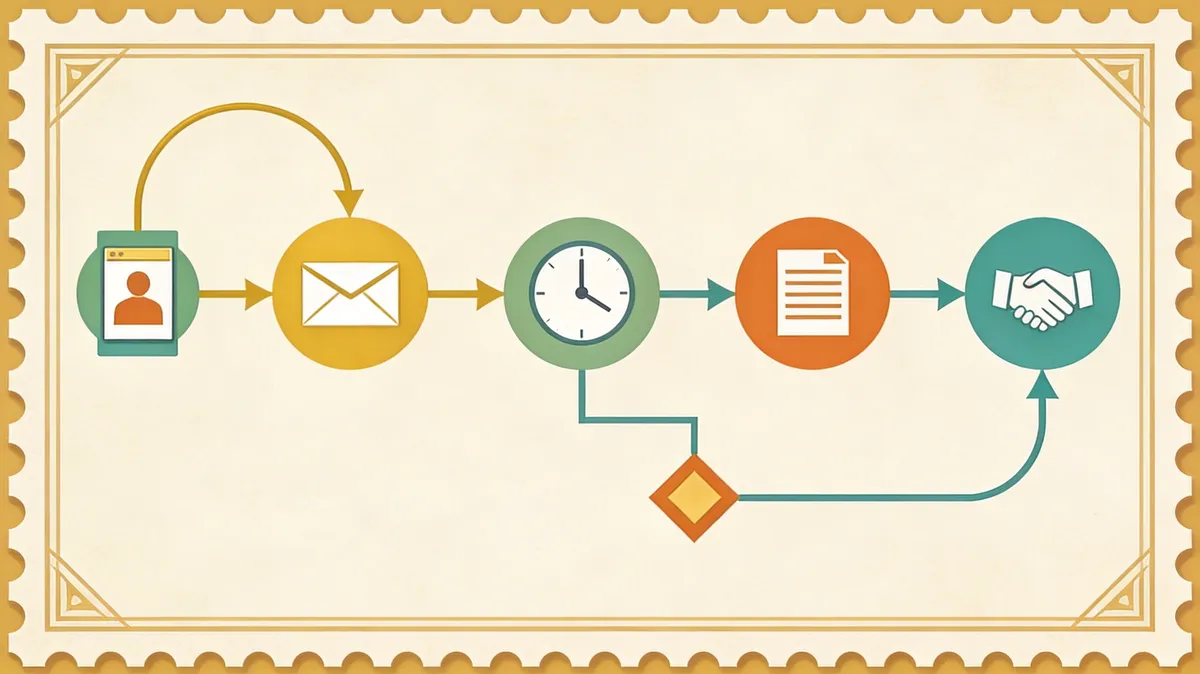
1. Map one workflow end‑to‑end.
Take a concrete example—say, "new cross‑border M&A instruction" or "regulatory investigation"— and map every step from first contact to final invoice. Highlight where relationship insight would change what you do: who you put on the team, which practice you loop in, how you follow up.
2. Ask what your CRM sees today.
For that same workflow, what does your current CRM actually know? Can it tell you everyone who has touched that client in the last 24 months, the strength of those relationships based on actual communication data, and where there is obvious whitespace?
3. Design the integrations, not just the tools.
When you next review vendors, don't start with feature grids. Start with this question: "How will this product automatically capture data from our email, calendar, and matter systems, and what will it do with that information to surface cross-selling opportunities, relationship risks, and 'who knows whom' intelligence?"
AI in law firms is now a baseline requirement. The firms that pull ahead will be the ones that connect that intelligence to a CRM‑driven understanding of their clients and markets.